Chair: Prof. Poonam Kumria
Co-ordinator: Dr. Archana Kumari
Indraprastha College for Women was founded in 1924, evolving from Indraprastha Putri Pathshala established in 1904 in Chandni Chowk. The institution functioned from various premises in its early decades like Chippiwara and then Chandrawali Bhawan in Old Delhi. Intermediate College classes commenced on 27 May, 1924, making the official beginning of the college. The college was formally inaugurated, and its name was changed from Indraprastha Girls’ College to its present form. Over subsequent decades, the institution expanded both academically and physically, constructing hostels, staff quarters, a gymnasium, and additional academic blocks. Showing a spirit of determination, the students of the college broke the ground themselves and a swimming pool was built by their shramdaan in 1956. New programmes including B.A. (Hons.), M.A., B.Com. (Hons.), B.Sc. (Hons.) Computer Science, and Mass Media and Communication were introduced with university approval, alongside the establishment of departments such as Environmental Studies, Sociology, and Geography. The college marked its Silver, Golden, Diamond, and Platinum Jubilee milestones with national recognition. In 2002, the campus was declared a heritage building by the Government of NCT of Delhi.
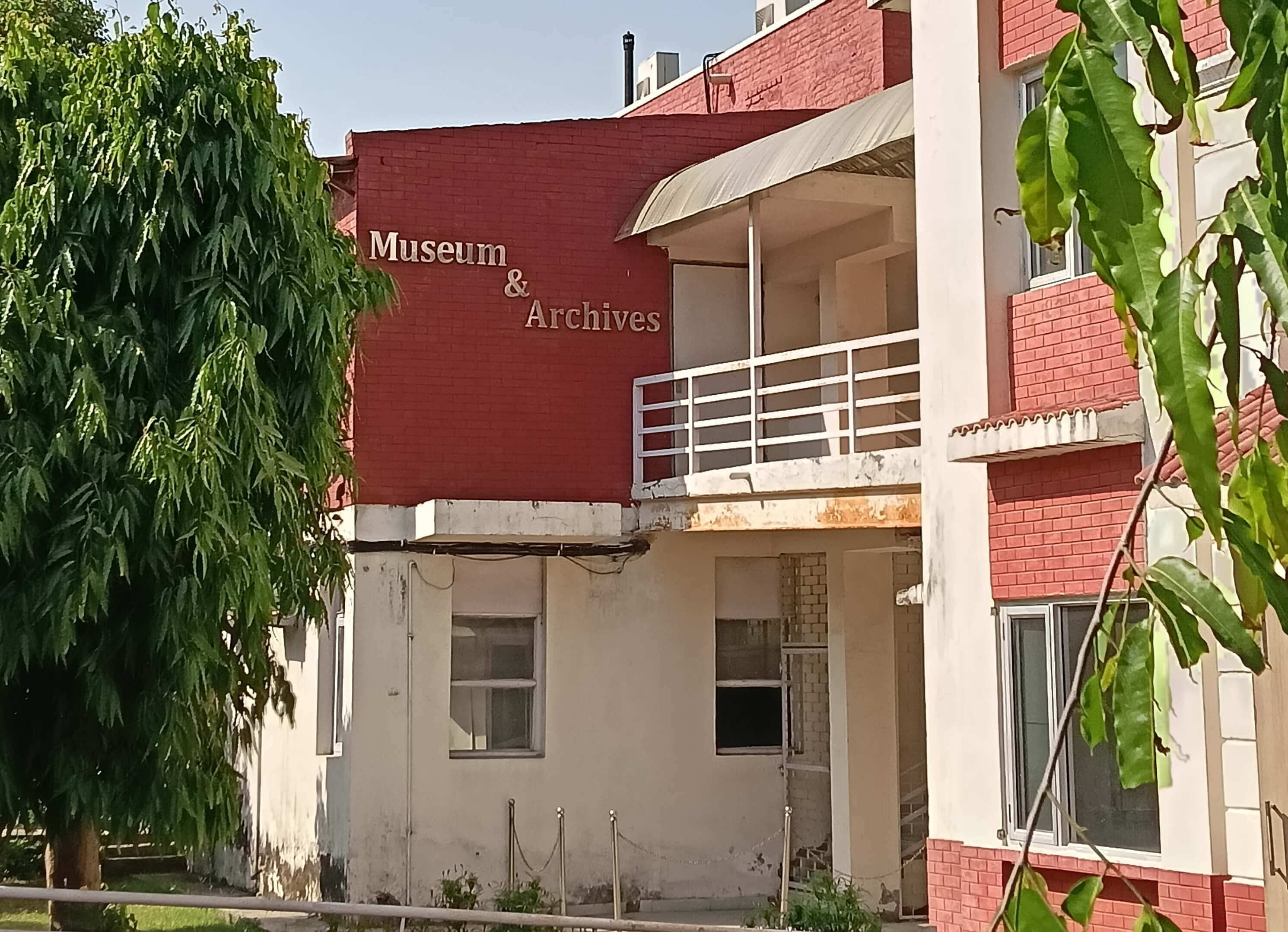
The College Museum and Archives was inaugurated on 8 March 2006, on the occasion of International Women’s Day, as a formal initiative to preserve and document the institutional history of the college. In recent years, the Archives has also functioned as a site of academic training and research engagement. An internship programme was organised to familiarise students with primary sources relating to the history of the college along with analysing the same in the form of archival processes, including cataloguing, preservation practices, and the handling of these primary documents. In association with the National Archives of India and Department of Delhi Archives, a specialised workshop was conducted to provide students with formal training in archival methods and professional standards of documentation and conservation. These initiatives have further strengthened the foundation of the institution’s early history and reflects the continuing academic engagement facilitated by the Museum and Archives for the students.
The Museum and Archives has rare photographs, like the inauguration of the College, photographs of the founders, the First Managing Committee, the First Governing body, the First Faculties, the pictures of students of the 1920’s in saris with their heads covered attending cooking classes and doing experiments in the science laboratory, several interesting pictures of students and teachers of the 1930’s and 1940’s participating in cultural programs, the First Education Minister of Independent India, Maulana Abul Kalam Azad taking the salute on First College Day after Independence and as the College moved on, the pictures of the Jubilee years and the distinguished guests and alumnae who visited the college including Nehru’s visit on college’s silver jubilee, Indra Gandhi inaugrating college gynmasium and Atal Bihari Vajpayee’s visit on the platinum jubilee are also preserved; it has documents and correspondences related to the acquisition of ‘Alipore House’ – the present premises of the college, the norms of appointment for the Faculty and the Principal, the structure of Salaries, struggles with the British Government and the University pertaining to the status of the College, the nature of the Governing Body and the Trust; there are some newspaper clippings of the period of the national movement that report the participation of the students in picketing in the Quit India Movement, hoisting and saluting the national flag defiantly and many such activities, the British Government penalizing the institution for its active participation in the national movement by stopping the wheat permits to the college hostel and reprimanding the teachers and students who took part in the national movement; there are magazine sheets which have articles by students that reflect the political thinking of the students, particularly of the 1930-1950 era, ‘Voices’ of early Alumnae that capture their emotions, College Magazines including the first hand-written College Magazine ‘The Torch Bearer’, the Admission and Withdrawal Register of 1924-1947 that provides invaluable insights into the sociological and cultural developments of the time, Principal's Reports, College Prospectus and many more items, which date back to not only 1924 but even earlier, to the inception of the parent institution in 1904 the Indraprastha Hindu Kanya Shikshalaya. With resources such as these, the Museum and Archives proves to be a significant addition to the corpus on institutional histories, heritage learning and gender and interest scholars and students keen on exploring and researching in these areas.